Be Part of the Change!
In Uganda, 1 in 20 girls do not complete secondary school or higher education. Your support helps keep the doors open and build women change-makers and leaders.
$25 provides school supplies for a girl.
We're a verified nonprofit of over 40 years in the USA, with 501(c) (3) status, and have been ranked a four-star charity with a 97% rating for accountability and transparency. We work with our partners in Uganda, the Uganda Rural Development and Training Programme (URDT) in Kagadi, Uganda.


Upcoming Virtual Event
March 31, 2026 5 PM EST
UPCOMING! Discover How a Ugandan Institution is Shaping Women's Leadership & Development in Rural Uganda! With Stuart Cohen, our newest Board Member.
Stuart has had a career as a commercial and editorial photographer over the last 50 years or so. He started working with Robert Fritz in the early 80’s at the house in Chelsea, and taught DMA for several years. His first visit to Uganda was in the mid 1980's with Han and Silvana, before URDT moved to Kagadi. He is friendly with the Musheshe family and eager to see the African Rural University (ARU) model reach a wider population in Africa. Stuart will reminisce about the early days of URDT.


URDT Girls School
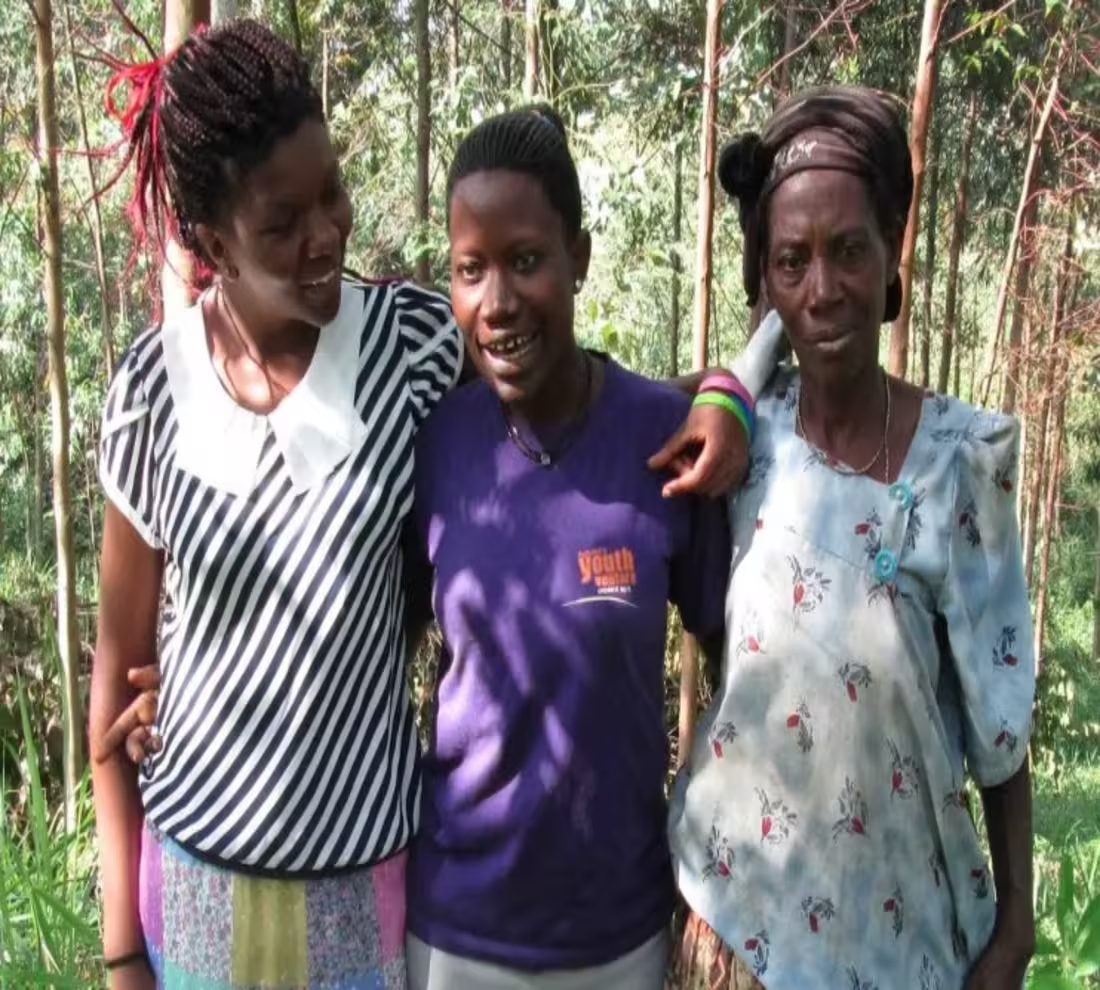
The URDT Girls School families raise themselves from poverty to the middle class by the time their daughters graduate from school. Each Girls School family then hosts African Rural University students who are doing their practicums and internships in rural communities during the second and fourth years of college.
Each of these awesome women university graduates is then offered a job as an Epicenter Manager/rural transformation specialist/sustainable agriculture expert in a subcounty in western Uganda, working with community members and local government officials to solicit and then realize the community members’ visions, new roads, schools, farmers’ co-ops, savings and loan societies, water treatment, etc.

Women-Focused Initiative
Our Partner in Uganda, the URDT Institute, is set to commence the skilling of young women this week across 20 districts and four refugee settlements. The initiative follows the successful verification of training centers, artisans, and participating young women across various occupations.
In the first year, the program aims to train 5,000 young women across 545 training centers using a satellite skilling model. The training emphasizes value addition and the integration of ICT to enable participants to compete effectively in an increasingly technology-driven economy.

We Don’t Give Aid — We Build Capacity. We believe people are the drivers of their own development, and we empower them to create the futures they envision.

The two-generation approach to education
The 2-gen approach to education was pioneered by Mwalimu Musheshe and Alida Bakema Boon at the URDT Girls School, where young girls teach their entire families how to create visions and to achieve them, has now been in practice for 25 years!
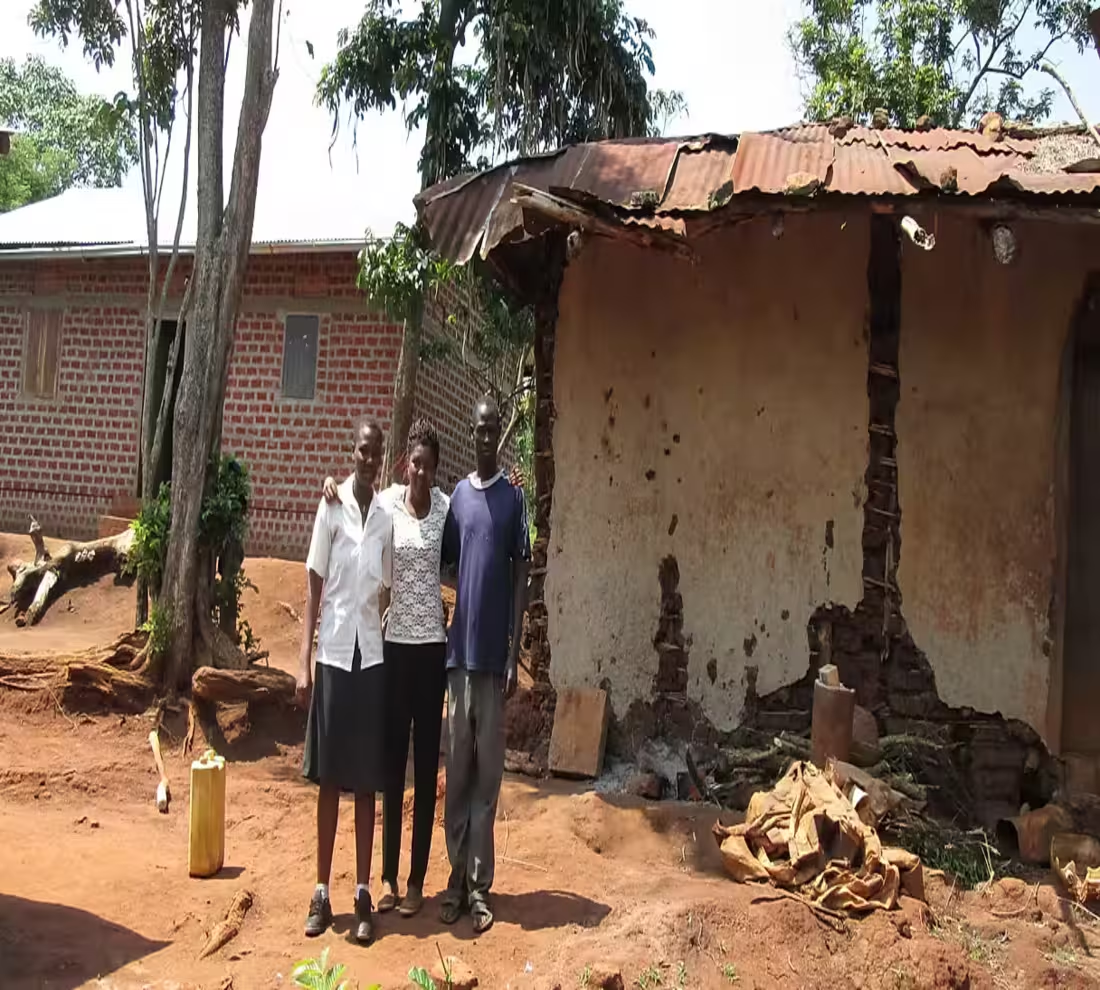
Today, even the poorest families already have real homes, rather than mud huts, latrines, and cash crops. Now they want to graduate from University, have electricity, plumbing, and cars.

Vocational Skills Training
The URDT Vocational Institute is training both men and women in over 30 different trades, from carpentry and plumbing to motorcycle repair, restaurant management, and bee-keeping. Over the last five years, the Institute graduated 70,000 students who, in turn, started their own local businesses!

Cervical Cancer Screening
Cervical cancer is the leading cause of cancer-related deaths among Ugandan women, with limited access to screening and treatment in rural areas worsening the crisis. The URDT-FCF project, active since 2017, has taken a proactive approach bringing screenings directly to villages through mobile outreaches while also operating in local health centers. Dr. Frederik van Slooten, a Dutch gynecologist supervising the program, explained its critical mission: “We are decentralizing cervical cancer screening taking it from urban hospitals to the most remote communities, ensuring all women can participate. Our target group is women aged 25 to 49, and we aim to screen 15,000 women in two and a half years.” So far, 75% of that goal has been met, with a year remaining.
“I had persistent pain and feared the worst. When they told me I didn’t have cervical cancer, I was relieved,” she shared. Though her pain was unrelated, she vowed to spread awareness: “I’ll encourage others to get screened.” Katushabe Joseline, a 38-year-old beneficiary from Rutooma, traveled from Mwitanzige after hearing a radio announcement.
5M+
Lives Impacted
5,020+
Families Transformed Through Education
70,000+
Youth Empowered
Connect. Invest. Empower
.png)